STEPHANIE SODERO

  • about
  • articles
  • book
  • creative
  • climate gallery
  • about
  • articles
  • book
  • creative
  • climate gallery

crisis mobilities 

Drone-topia? A mobile utopia experiment

7/11/2017

2 Comments

 
CONTEXT
How do we move things when it really matters? This Mobile Utopia Experiment explores the potential for using drones to transport vital medical cargo, such as blood. Cargo medical drones are already used in Rwanda. Could they be used in the UK? Could they be used to cross local Morecambe Bay in times of crisis?

​Moreover:
  • What are potential utopian applications of drone technology?
  • Can the transfer of technology from military to civilian and commercial uses yield benefits in line with utopian ideals?
  • What considerations and complications are entailed?
  • What is gained and lost in such innovations?
  • What feelings and perceptions accompany such imaginaries?

​EXPERIMENT
We explore this high-tech concept in a low-tech way. On Nov 1-2 2017, at Lancaster University campus, we engaged passersby and Mobile Utopia Conference attendees in a five minute enactment and survey. Our goal was to foster conversations about the perception of and concerns related to cargo medical drones.
​PART 1 - FLIGHT 
​
Step 1

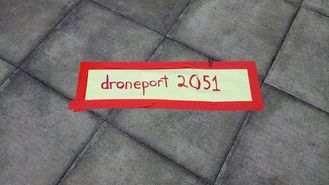
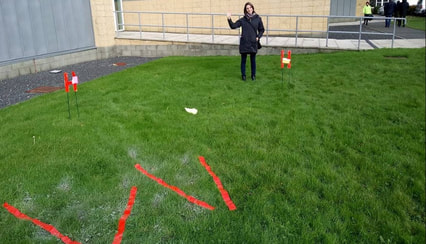
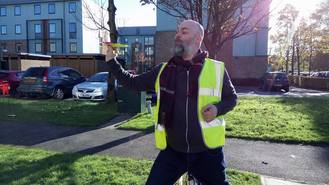
Step into the DronePort
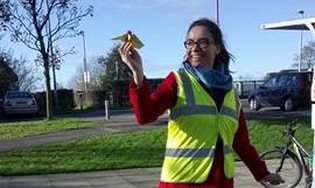
Don the magical yellow pinney
​Transform into a professional drone operator
Picture
Picture
Participant: Zofia Bednarowska

​Step 2
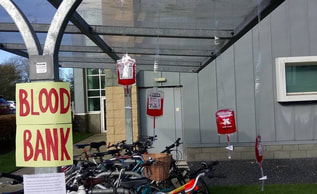
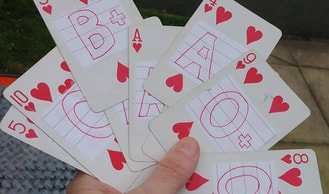
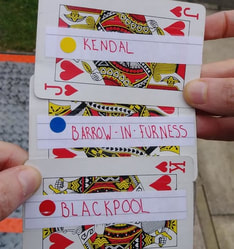
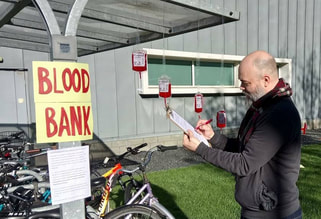
​Visit the Blood Bank to identify your cargo payload
Picture
Picture
​
Step 3

Identify which regional hospital needs your supplies 
Picture
Picture
Co-organizer: Julia Hildebrand

Step 4
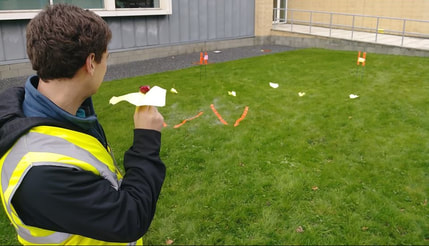
Undertake your flight (up to three attempts)
Picture
Participant: Christian Mercer
Picture
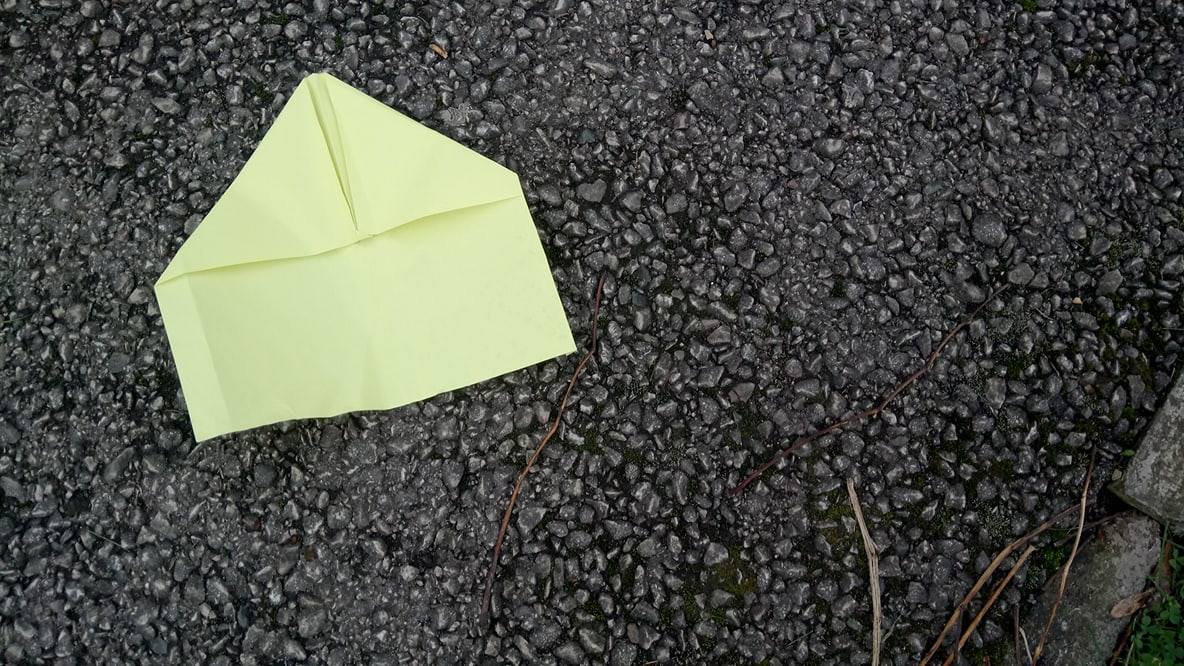
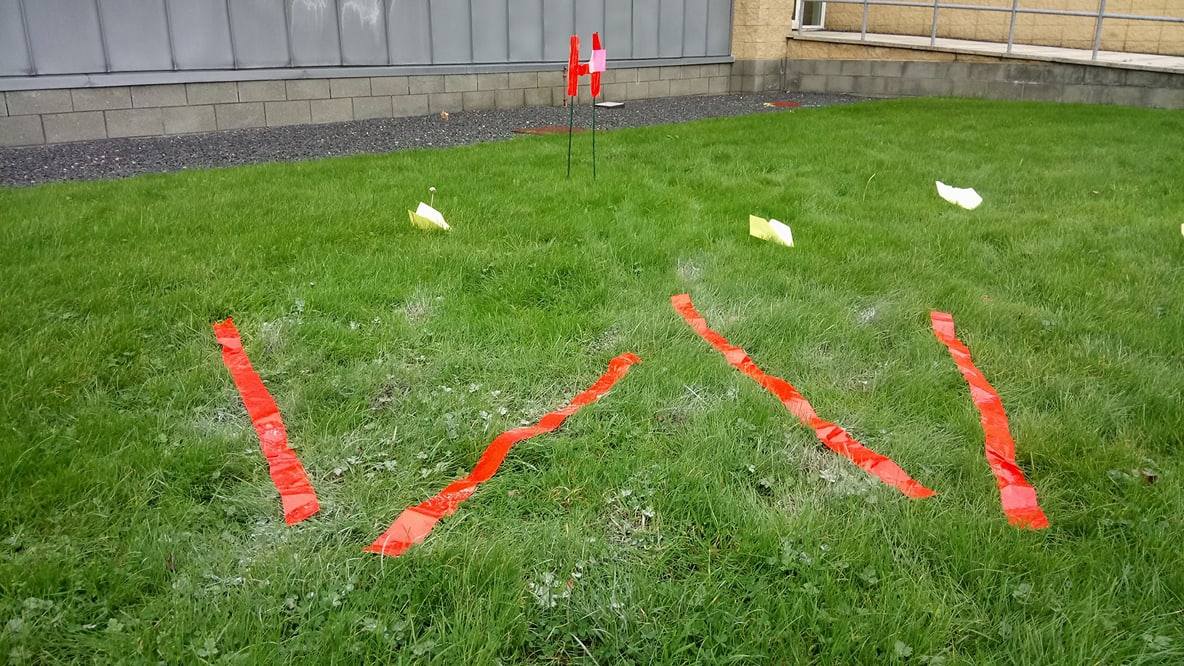
This drone was lost in Morecambe Bay (aka pavement).
Picture
Participant: Dominic Smith
Picture
Ghost drones represent failed flights and lost cargo. The orange 'H' represents a hospital and the orange stripes represent mountains.

Step 5
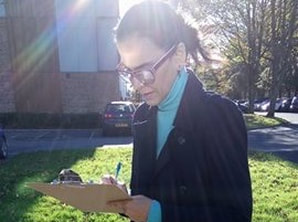
Complete post-flight assessment (aka survey)
Picture
Participant: Dominic Smith
Picture
Participant: Maria Alice de Faria Nogueira
​
PART 2 - POST-FLIGHT ASSESSMENT 

​This Mobile Utopia experiment was a chance to engage people on Lancaster University (UK) campus on the topic of cargo medical drones. The results of the informal survey varied (n 31) -- with some participants very much in favour of the idea:
  • ​I believe it would be very useful here, due to long distances between small suburbs around Lancaster ... unexpected weather conditions and in the case of such events as flooding in 2015.
and others very much opposed:
  • Our skies are full. No. Don't like it. Too much invasion into private space.

Trust
​Overall,  participants were:
  • comfortable with transporting small/light consumer goods
    • e.g. book, groceries, pizza, love letter, trainers (sneakers)
      • Small and easily transportable = agree.
 
  • somewhat comfortable with the transport medical cargo (though some felt drones should only be used for life-saving medical cargo, and not for consumer goods)
    • e.g. blood, prescription medication
      • ​​I think with strong rules and regulations, and expert fliers, using drones to transfer blood could be good where no other options are viable.
      • If the blood were transported by small drone in open air, I would be concerned with the safety and what it may have come into contact with.
      • ​If the love letter or prescription fell into the wrong hands they could be used for blackmail/drug purposes.
 
  • very uncomfortable with the idea of transporting cargo, where if the drone crashed, could lead to fatality
    • e.g. people, car​
      • ​Too much at stake if it goes wrong
Such a concern about transporting people and cars is somewhat at odds with Uber's recently announced target of introducing flying cars by 2020 (though these models would be piloted).

Drones were viewed as a potential tool for overcoming traffic and road works, connecting remote communities, and an overall means for faster and more efficient delivery. To this end, the skill of drone pilots in safely navigating drones, preventing crashes and cargo loss, and responding to unexpected situations was emphasized.

Cameras
Participants supported the idea of drones using cameras to navigate safely, but also expressed concern about privacy issues:
  • People might not want to be filmed, or there might be things that aren't allowed to be filmed.
  • Depends what the footage is being used for and who owns it.
  • I'd like this to happen only in some legally defined situations such as emergency or security reasons.

CONCLUSION
​This was a back-of-the-envelope public engagement experiment intended to engage participants in a high-level conversation about the potential for cargo medical drones in Lancaster, UK. The use of paper airplanes rather than an actual drone resulted in a qualitatively different experience. One key ---  but by no means only -- difference being noise. The initial receptivity suggests the need for a more realistic simulation and deeper participant engagement.

2 Comments
Drohnen Versicherung Vergleich link
23/9/2022 02:47:44 am

Thanks for this great share. This site is a fantastic resource. Keep up the great work here at Sprint Connection! Many thanks.

Reply
Drohnen Versicherung link
3/10/2022 01:59:51 am

I really enjoyed this post. You describe this topic very well. I really enjoy reading your blog and I will definitely bookmark it! Keep up the interesting posts!

Reply


Leave a Reply.

    Author

    Stephanie Sodero is a postdoctoral researcher in crisis mobilities at Lancaster University's Centre for Mobilities Research. 

    Julia Hildebrand is a PhD Candidate at Drexel University where she studies consumer drones. 

    Categories

    All

    RSS Feed

Proudly powered by Weebly